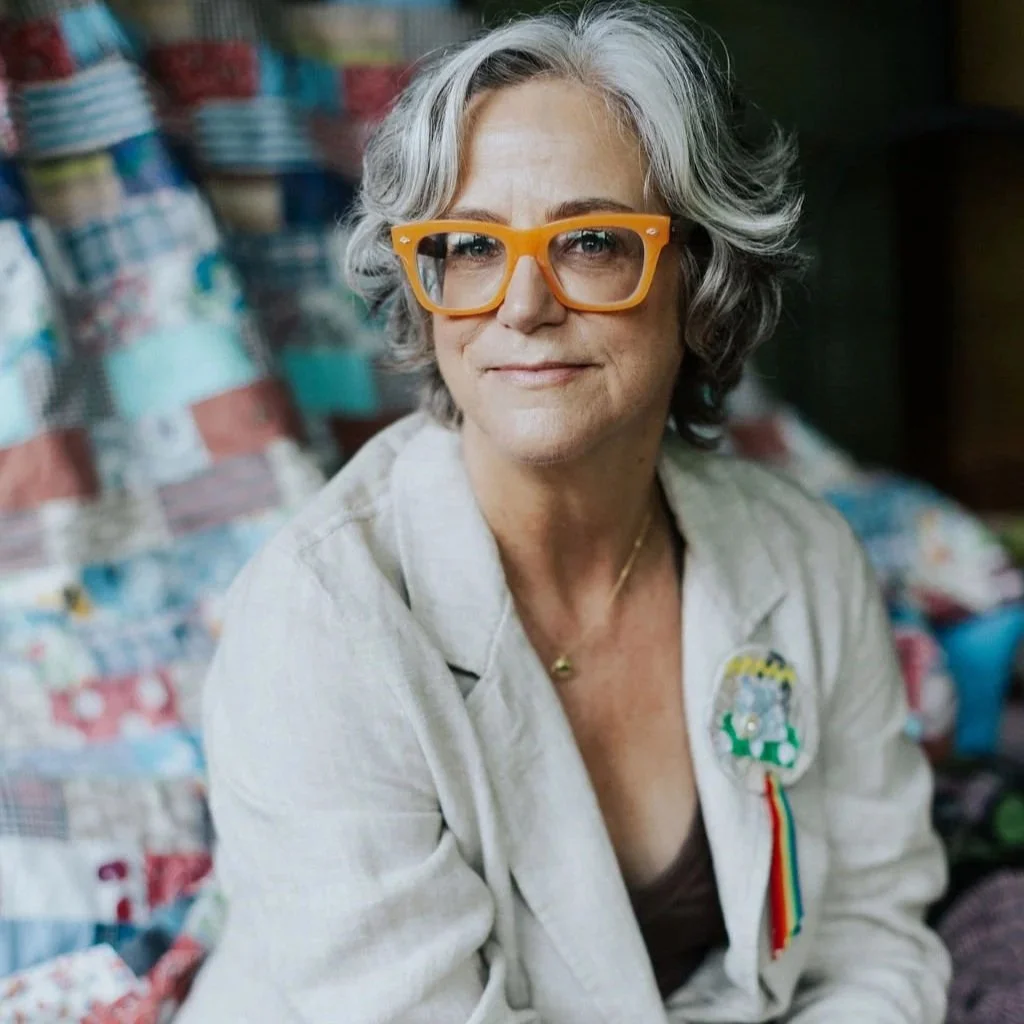
I am a writer, teacher, Buddhist chaplain, grief tender, and textile artist. I’m also a retired nonprofit professional, mother, wife, nature girl, community singer, and griever.
I help people meet their grief as a normal part of human life and discover its gifts of connection, deepening, and transformation. I believe that when we slow down our mammal bodies, that our natural inner wisdom and creativity can show us the way through grief to wholeness.
The first time I experienced grief (that I remember) was when I was a toddler and my mother and I left my father behind in Japan, where I was born, for Oklahoma. I cried with longing for my dad’s strong arms and his bedtime stories. Later, growing up, I moved 10 times within three cities as my divorced mother sought opportunities—better jobs, marriages, and apartments. Along the way, I lost friends, familiar places, and opportunities. By the time I was 30, I’d experienced a lot of loss.
Yet, I did not claim “griever” as a self-descriptor. I was a hardy, resilient survivor. I had grit. I was taught that to grieve was weak. Longing and regret were a waste of time. The spiritual faith I was raised in (Lutheran Christianity) offered a funeral service (and probably lots of casseroles) but no acknowledgment of the ongoing nature of loss.
My experience isn’t unusual—our culture is death- and grief-phobic. Shielded from people dying naturally at home, we don’t grow up with death and grief so we have no idea how to meet them. Only a few generations ago, our ancestors spent time with dying and knew that the period following loss is a sacred portal deserving silence, care, and devotion.
Fortunately, we all have natural inner wisdom. From age 12, I kept a journal. Through writing about my experiences, I witnessed my own losses and found some clarity and healing. Later, some good therapy helped, too.
I am dedicated to welcoming and valuing grief as a natural gateway to personal growth, connection, and belonging.
We will all lose what we love dearly—there’s no escaping it. But we have a choice about how we meet our grief. People who are able to experience their emotions, connect with others in grief, and eventually craft some deeper understanding of life from their loss are mature human beings. Our world needs such mature people.
I am a graduate of the Upaya Buddhist Chaplaincy program, with training in interfaith spiritual care, being with dying, and bearing witness. I also studied with Francis Weller, author of The Wild Edge of Sorrow: Rituals of Renewal and the Sacred Work of Grief. With decades of Zen Buddhism and yoga practice, I’ve led meditation and writing retreats and co-led community grief rituals. I am humbly on a life-long journey of understanding my role in upholding systems that cause suffering.
After years of writing and publishing poetry and fiction, I rediscovered sewing and fiber art as part of my own grief journey. These days, I love to hand-sew quilts that tell stories of healing and seed the dreams and visions I seek for my life and our world.
I am passionate about helping people slow down to feel their grief, create tiny beautiful things, and love this planet as themselves.
My journey to here
For four decades, I wrote and published poetry, essays, and short stories. Some of my writing was about grief. I still write in my journal most days to record and interpret dreams, track my thoughts and moods and gather quotes from books I’m reading, but my creative focus is on textile art now.. You can read some of my thoughts about grief and learn about what is bringing me joy in my very occasional newsletter and substack.
I would like to acknowledge
My teachers: Flint Sparks, Peg Syverson, Joan Halifax, Frank Ostaseski, Francis Weller. I want to acknowledge that our teachers are not perfect people and even when they have failed me or others, I have learned.
I thank my ancestors with whom I strive to build an ongoing relationship of respect and wisdom. I also thank the people who have shared their grief with me, all of them such wise and courageous teachers.
I acknowledge that I live and work on the Indigenous lands of Turtle Island, the ancestral name for what now is called North America. More specifically, I acknowledge the Alabama-Coushatta, Caddo, Carrizo/Comecrudo, Coahuiltecan, Comanche, Kickapoo, Lipan Apache, Tonkawa and Ysleta Del Sur Pueblo, and all Indigenous People who have been and are now part of the beautiful place now called Austin and Central Texas.
My commitment to racial healing
I contribute a percentage of Sweet Spot Soul Care revenue to the Austin Justice Coalition, The Black Fund of Central Texas and Torch Literary Arts. These organizations work to make my community more equitable, safe, just, and beautiful.